Transit Desert & Transit Mirage — Showcase
Visuals and session details from AGU25 and TRB2026 oral presentations
Shifting Transit Deserts and Transit Mirages:
A Behavioral Reinterpretation of Dynamic Transit Equity
Transportation Research Part A: Policy and Practice — Under Review
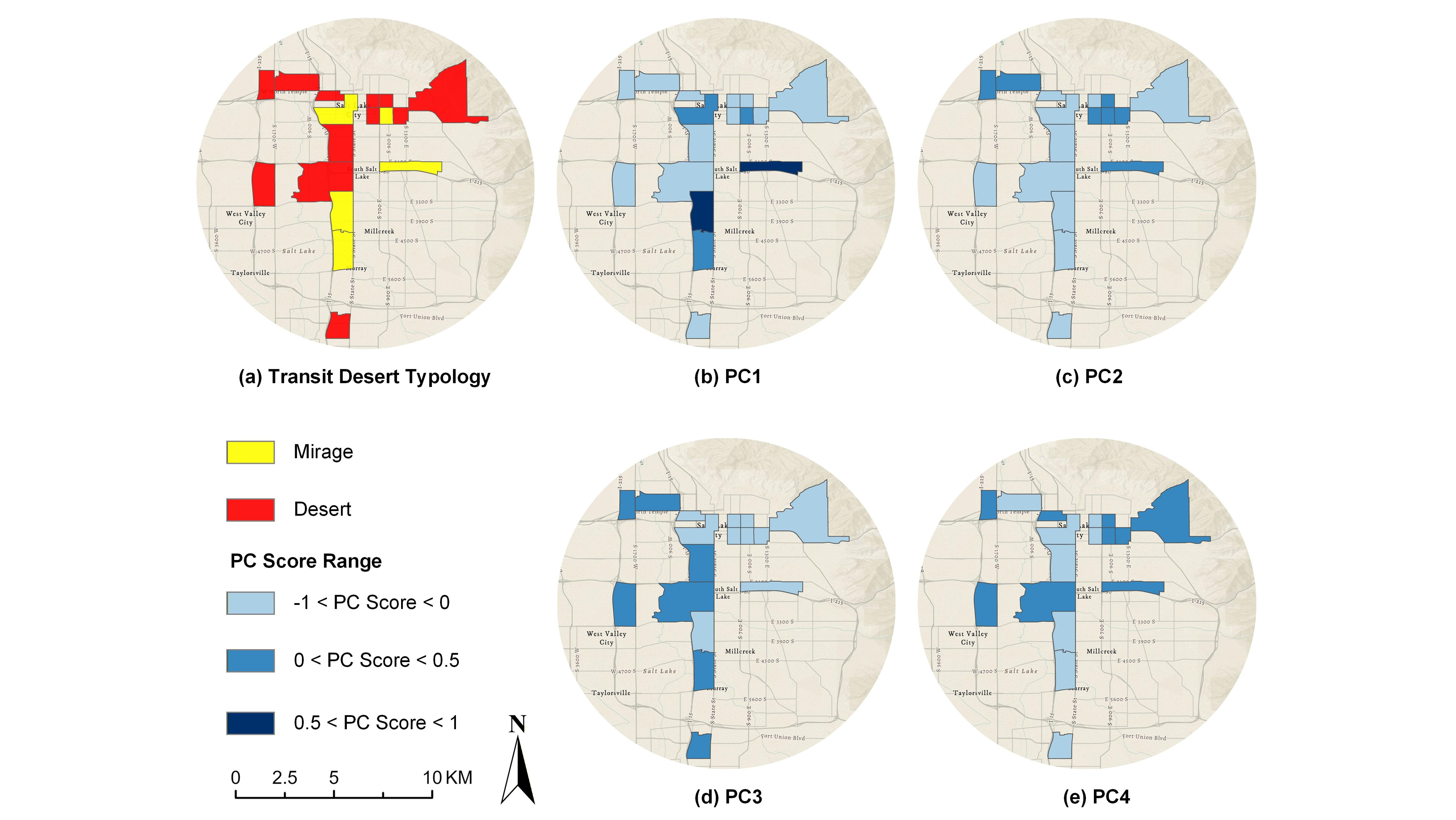
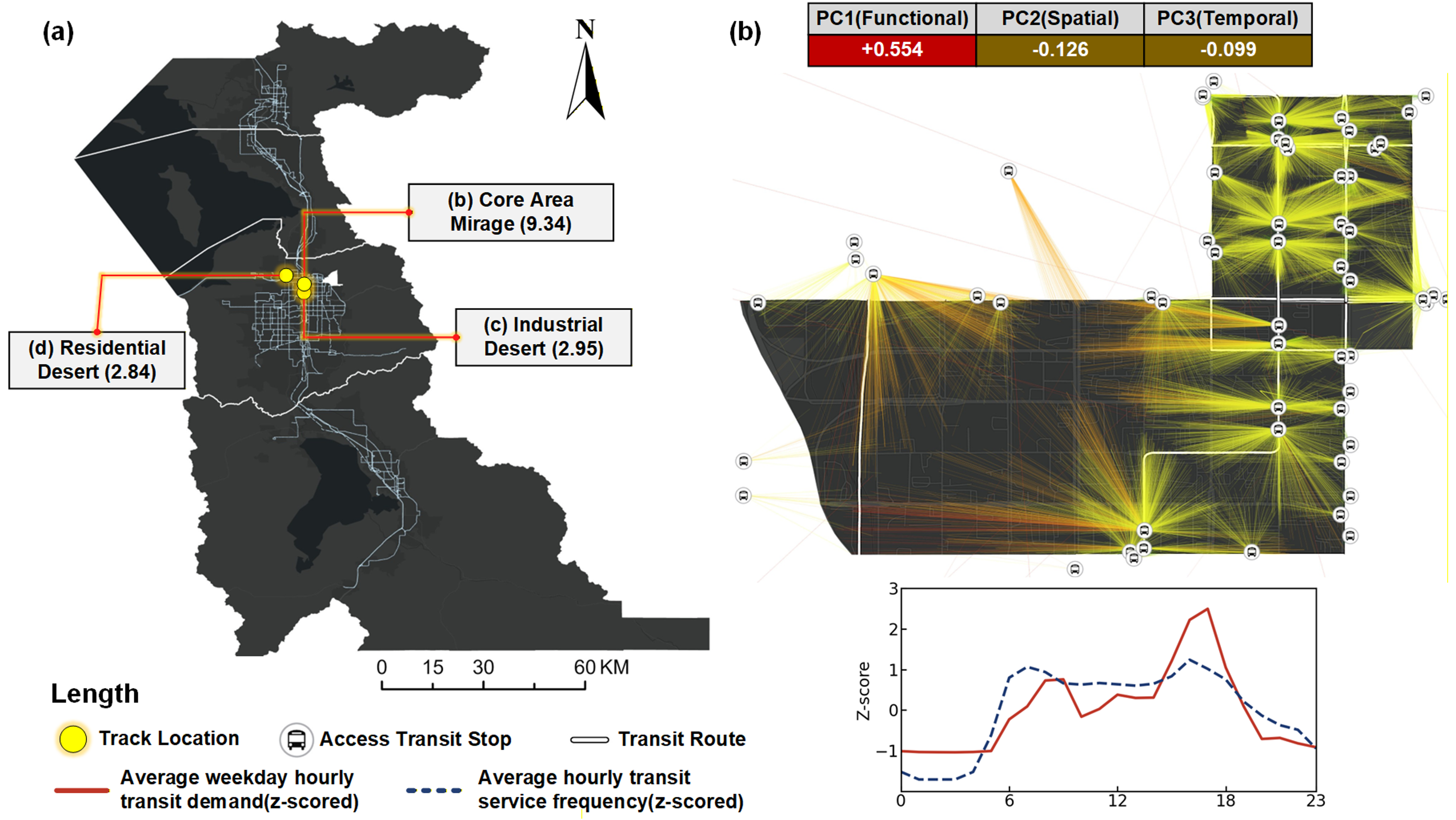
Transit equity, a central concern in transportation planning, has often been operationalized through static spatial metrics comparing aggregate demand and supply, overlooking how inequity evolves through temporal and behavioral dynamics. This study advances a behavioral reinterpretation of dynamic transit equity, arguing that inequity also emerges from temporal and behavioral misalignments between how mobility demand unfolds and how service supply responds. Using weighted, trip-level mobility data reconstructed from high-resolution Location-Based Services (LBS) records in Utah’s Salt Lake region, the study integrates behaviorally grounded demand estimates with temporally varying supply, measured through frequency, stop density, and walking-based accessibility, to examine how inequity shifts with temporal rhythms and disruptions such as COVID-19. Findings support four theoretical propositions: (1) equity is behaviorally contingent, shaped by who travels and how; (2) equity is dynamically constituted, evolving with temporal rhythms; (3) a measurement paradox arises when dynamic data reveal statistical illusions of scarcity in well-served cores, termed transit mirages; and (4) inequity thus manifests as either real deserts (structural deprivation) or mirages (behavioral distortion). Together, these insights reframe transit equity as a process of synchronization rather than a static balance, extending equity from spatial access to temporal and behavioral justice. This behavioral reinterpretation underscores the need for time-sensitive monitoring, resilient service provision, and targeted interventions that distinguish real deserts from behavioral mirages.
Key Figures Presented
Below are selected visuals featured in both AGU25 and TRB2026 oral presentations.